
The History of Automotive Refinishing: 250 Years of American Ingenuity
Monday, September 21st
From Hand-Brushed Varnish to Fully Connected Refinishing
In 1776, America declared its independence with a belief that progress was worth pursuing.
Over the next 250 years, that same spirit would build railroads, invent the assembly line, send astronauts to the moon, and transform a horse-drawn carriage into today's technologically advanced automobile.
Few industries tell the story of American ingenuity better than automotive refinishing.
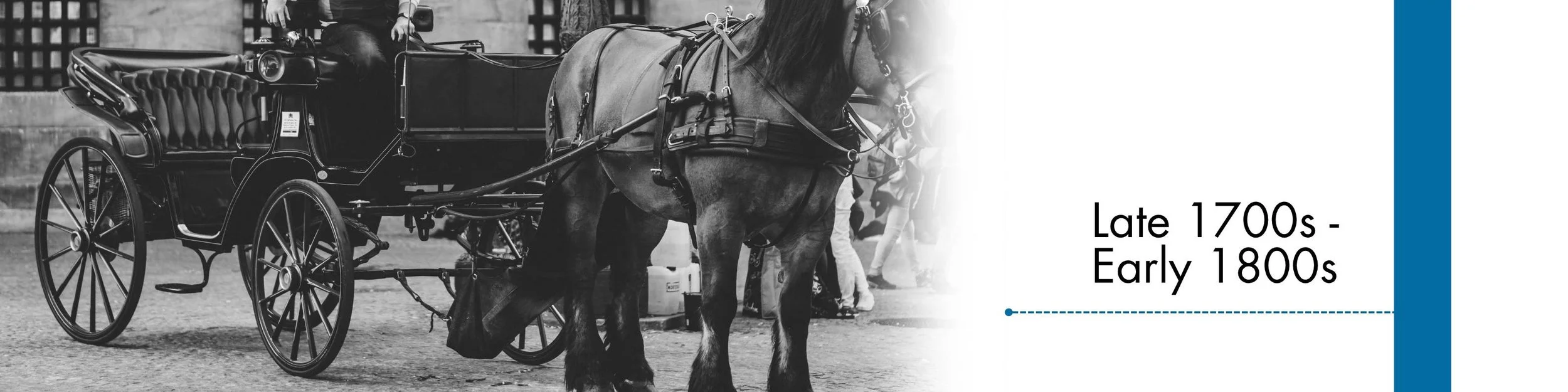
A horse-drawn carriage with its driver sitting behind the horse.
Early 1700s-Late 1800s: It Started With a Brush
Long before automobiles, carriage builders produced remarkably durable, mirror-like finishes using natural materials and meticulous hand craftsmanship. The 1881 publication House-Painting, Carriage-Painting, and Graining: What to Do, and How to Do It documented some of the earliest published mixing ratios and finishing procedures for carriage painting.
Bare wood was sealed with multiple coats of primer before layers of heavy surfacer were repeatedly leveled by hand with pumice stone and water. Guide coats revealed imperfections before additional primer, color, rubbing varnish and finishing varnish were applied. Premium finishes could exceed two dozen coats, making completion a weeks-long process.
Despite nearly 150 years of technological advancement since, the workflow remains remarkably familiar. Then and now, refinishers prepare the surface, apply primer, build and level the substrate, inspect, apply color and clear, then sand and polish to achieve a defect-free finish.
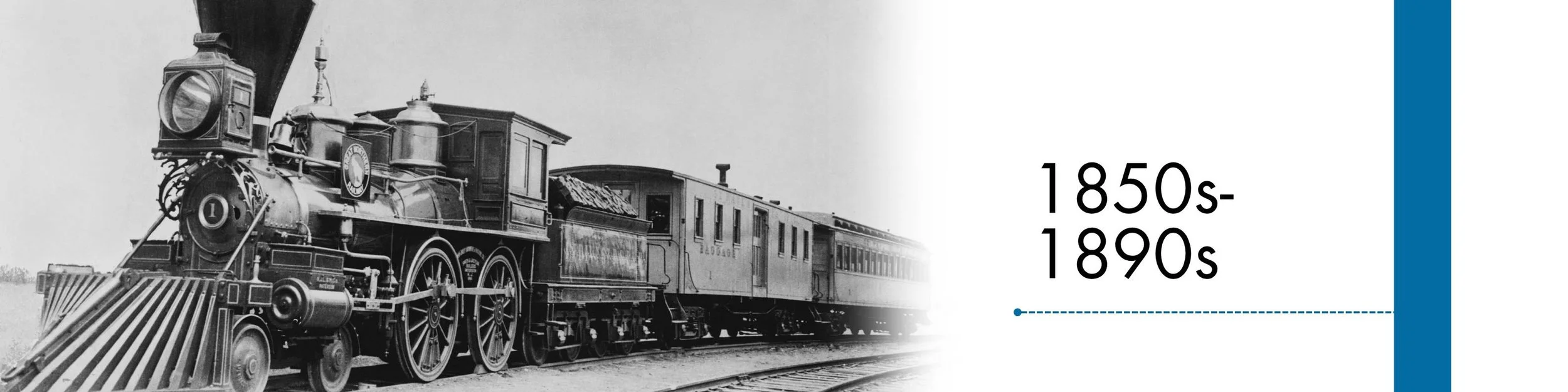
A steam locomotive is pulling passenger railcars along the tracks.
1850s-1890s: America's Railroads Drive Industrial Finishing
As steam locomotives gained traction during the mid-1800s, America's rapidly expanding railroad network created demand for durable, standardized coatings. Paint protected iron and steel from corrosion, preserved wood and created consistent identities for railroad companies.
By the 1880s, locomotive refinishing had evolved into a documented, multi-stage process. The 1887 Standard Color List outlined coating systems for iron and wood components across locomotive brands, including primers, surfacers, finishing coats, heat-resistant coatings and dedicated paints for lettering and numbering.
Long before today's OEM repair procedures, refinishing had become a disciplined process designed to deliver consistent performance, appearance and durability across an entire fleet.
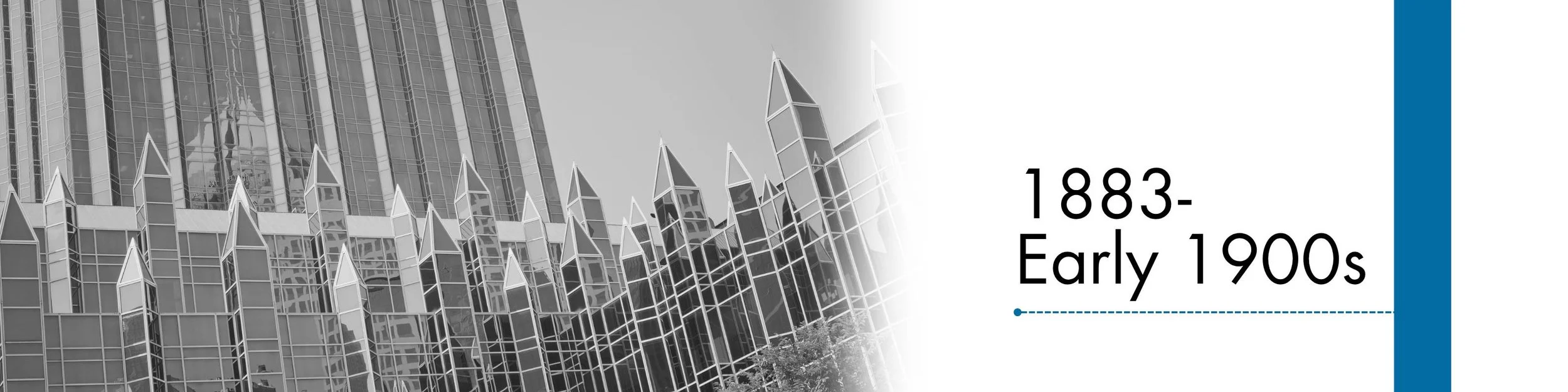
A detailed view of PPG’s headquarters, designed to showcase the company’s strength and expertise in glass manufacturing before its eventual divestiture of the glass business and focus on coatings.
1883-Early 1900s: An American Company Begins
In 1883, Pittsburgh Plate Glass, now known as PPG, was founded in Pittsburgh, Pennsylvania. Originally focused on glass manufacturing, the company grew alongside America's industrial revolution.
In 1900, PPG acquired an interest in Wisconsin-based Patton Paint Co. Over the next two decades, its paint business continued to expand, culminating in the acquisition of the Ditzler Color Company during the 1920s. With Ditzler's expertise in automotive color, PPG was now producing more than 500 "harmonious hues" for approximately 40 automobile manufacturers.
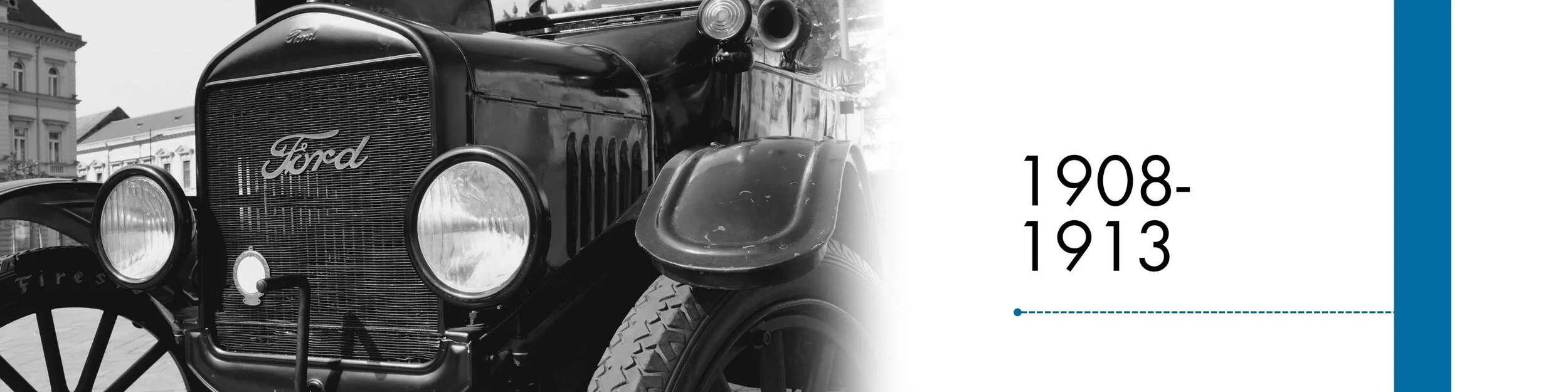
A close-up view of the front of an early Ford Model T.
1908-1913: The Automobile Changes Everything
When Henry Ford introduced the Model T in 1908, automobiles began moving from a luxury product toward practical transportation for millions of Americans.
As demand grew, Ford introduced the moving assembly line in 1913, transforming manufacturing. One challenge quickly became paint. Faster production required coatings that could cure quickly enough to keep vehicles moving.
Ford's famous statement reflected that reality: "Any customer can have a car painted any color that he wants so long as it is black." It wasn’t just a preference for black as it was that Japan Black cured faster and more consistently than many alternatives available at the time.
America's first automotive manufacturing revolution was driven as much by advancements in coatings as it was by engineering.
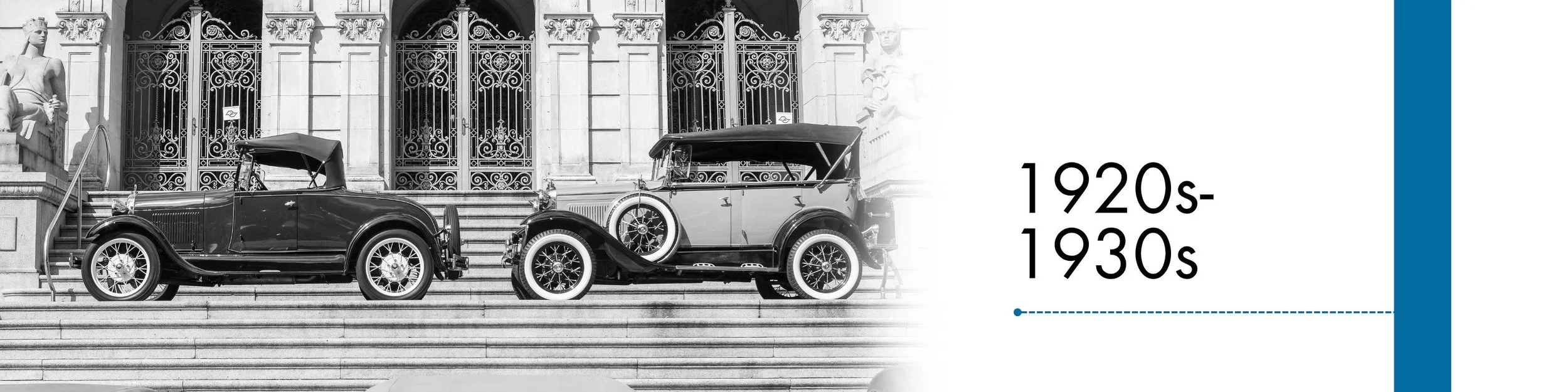
Two early automobiles parked outside an ornate building.
1920s-1930s: Spray Finishing and Color Innovation
As automobiles evolved, so did their finishes.
Nitrocellulose lacquer dramatically reduced drying times during the 1920s while making spray application practical for production and repair facilities. Painters could achieve smoother, more consistent finishes in a fraction of the time previously required.
By the 1930s, color options expanded beyond traditional solid finishes. Some early metallic paints achieved their shimmer using ground fish scales known as pearl essence. Aluminum flakes eventually replaced them, making metallic finishes more practical and widely available.
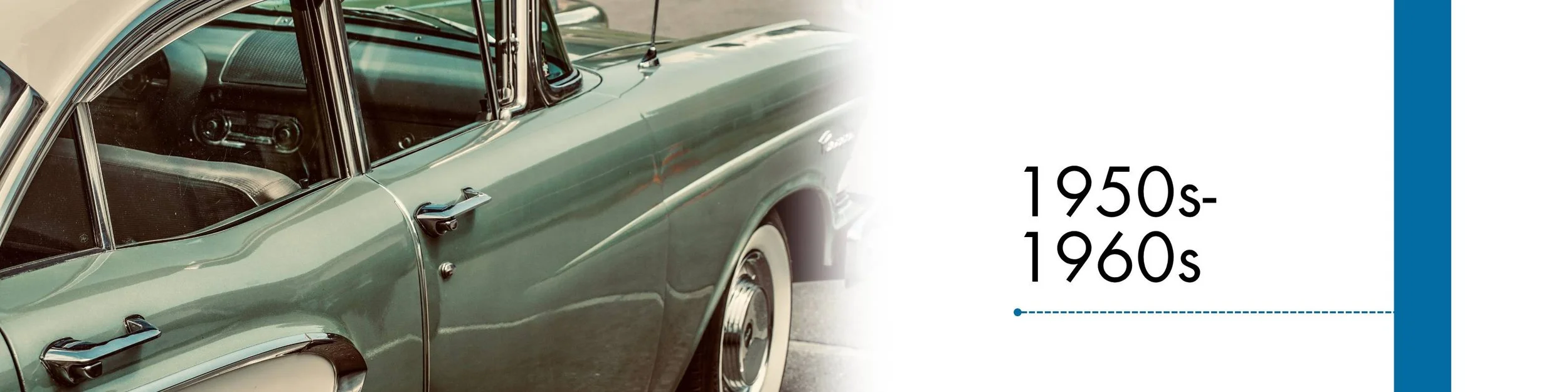
A close-up of a light green classic automobile showing its glossy painted finish.
1950s-1960s: Better Color. Greater Durability.
Following World War II, America's automotive industry entered an era of rapid growth and styling innovation.
Acrylic enamels improved gloss, durability and color retention while simplifying refinishing procedures. Throughout the 1950s and 1960s, bold solid colors became an important part of the automotive designs that defined the era.
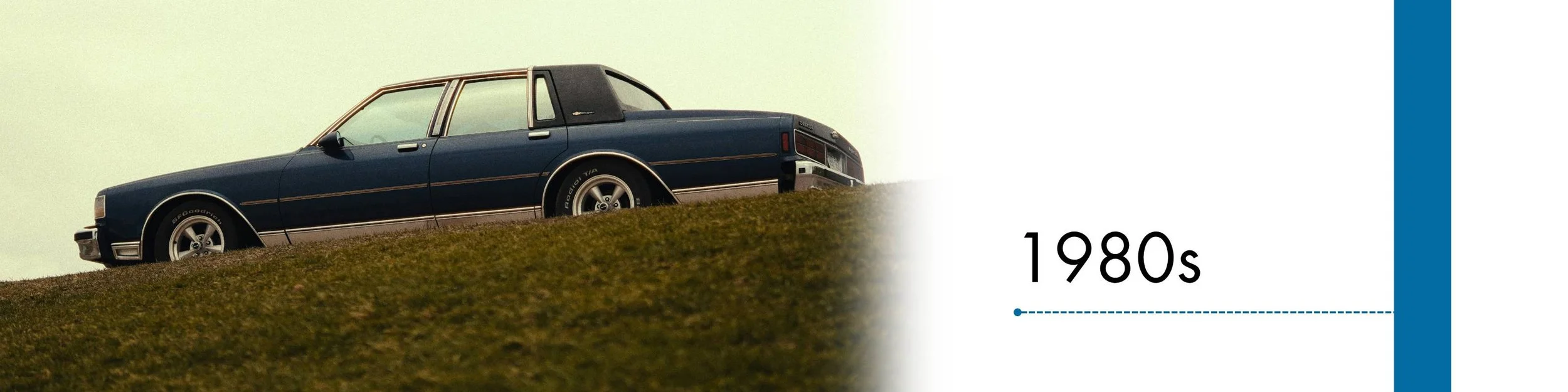
1980s: A dark blue 1980s automobile parked on a grassy hillside.
1980s: A New Standard for Automotive Refinishing
Basecoat/clearcoat technology fundamentally changed automotive refinishing.
Separating color from protection provided greater depth, improved UV resistance, increased metallic brilliance and simplified spot repairs.
Pearlescent finishes introduced additional depth and color travel, while advances in mica-based pigments produced greater brilliance, consistency and durability.
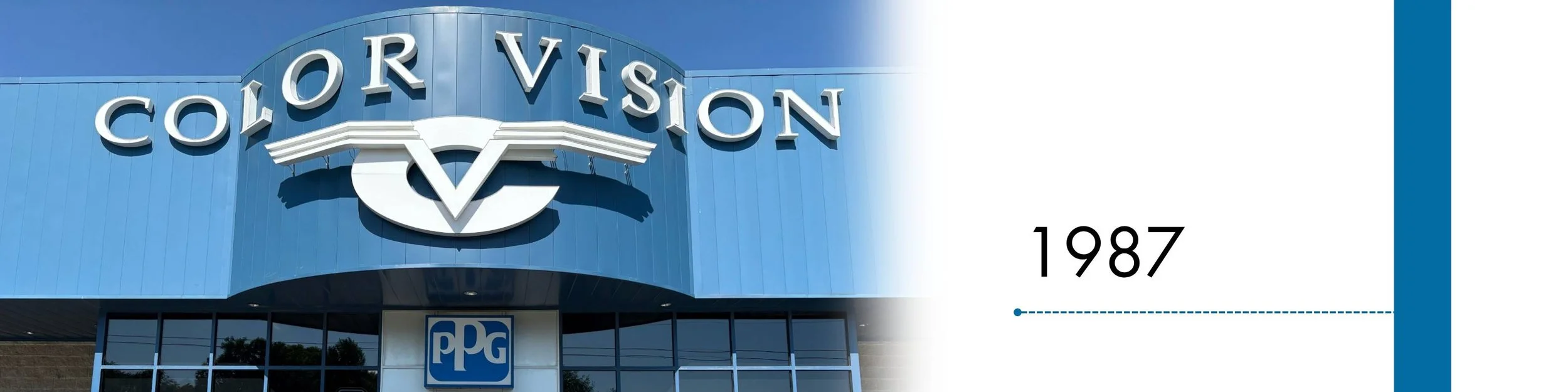
The exterior of ColorVision’s headquarter location featuring ColorVision and PPG signage.
1987: ColorVision Begins
In 1987, Gary and Kathy Allen founded ColorVision with a commitment to helping customers succeed through technical expertise, exceptional service and industry-leading products. The company would grow from its humble beginnings in West Plains, MO to locations in over five states and new headquarters in Springfield, Missouri.

A PPG Platinum Distributor® sign is displayed in an event hall, showcasing the strength, scale, and collaboration of PPG’s distribution network.
1995: The Platinum Distributor® Network
In 1995, PPG established the Platinum Distributor® Network, bringing together exclusive distributor partners committed to technical excellence, customer success and long-term growth. The program quickly grew into the largest single-line distribution network in North America.
ColorVision proudly became a founding member of the network in its inaugural year and would go on to be named PPG Platinum Distributor® of the Year twice since inception.
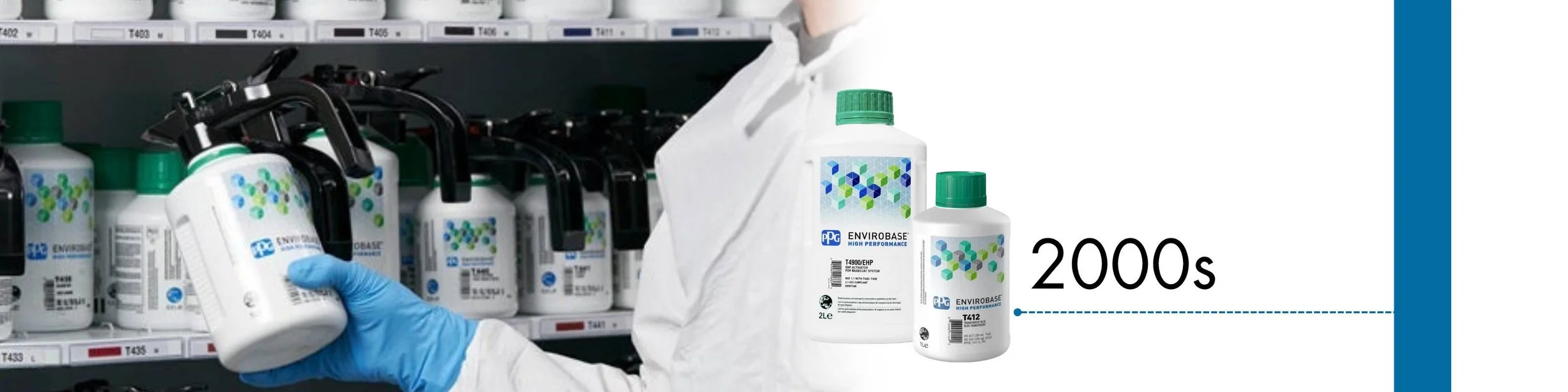
2000s: A technician handling PPG Envirobase® waterborne products in a mixing room.
2000s: Waterborne Technology Advances Refinishing
Waterborne basecoat systems elevated both color capability and environmental performance as coatings technology continued to evolve. PPG Envirobase® High Performance Waterborne Refinish System would become a benchmark for waterborne technology.
This improved color science, expanded formula databases and increasingly sophisticated color management tools helped technicians achieve more accurate and consistent repairs. New pigments, including glass flake, also created brighter sparkle, greater depth and increasingly dramatic appearance effects.
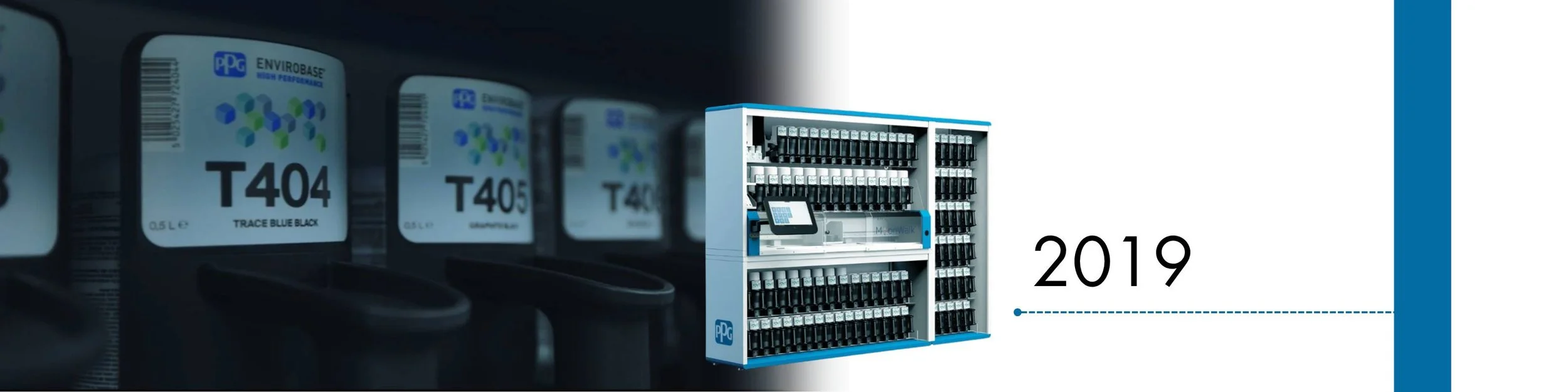
A close-up of PPG MoonWalk® toners alongside the full automated mixing system, showcasing the dynamic evolution toward greater accuracy and efficiency in refinish automation.
2019: Automation Arrives in the Mix Room
PPG introduced MoonWalk®, the world's first fully automated automotive refinish paint mixing system.
By automating formula dispensing, MoonWalk® improved precision, reduced waste, increased consistency and helped shops maximize technician productivity. Today, more than 3,000 PPG MoonWalk® systems operate in body shops across all 50 U.S. states and around the world.
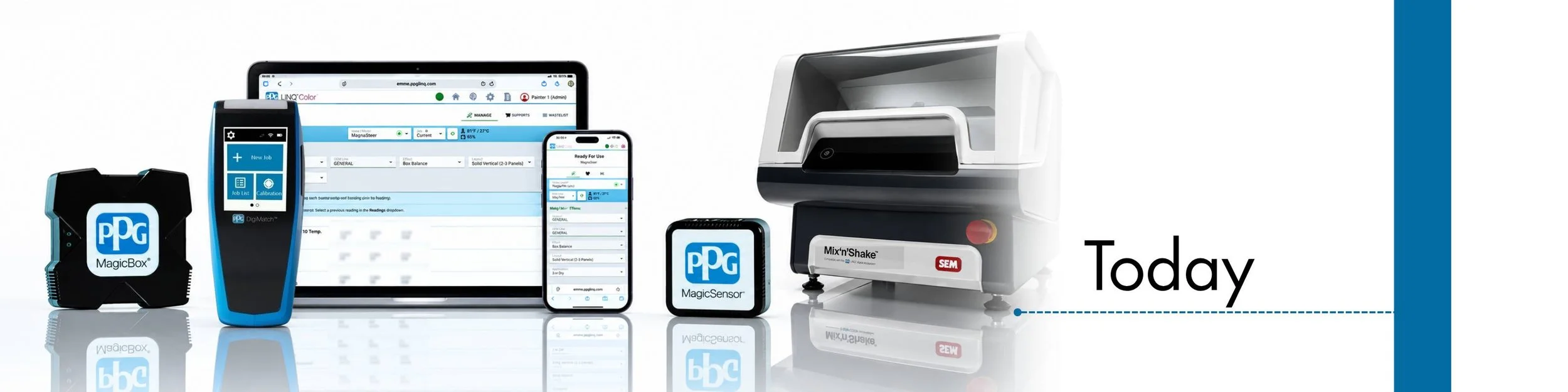
PPG digital refinish technology is displayed, showcasing its suite of connected devices and modern color-matching and automated equipment.
Today: The Connected Collision Center
Today's collision centers operate in ways that would have seemed unimaginable just a generation ago.
Digital spectrophotometers measure vehicle color. Cloud-connected software retrieves formulas. Automated mixing systems improve consistency. Connected technologies communicate throughout the repair process to help technicians work faster and more accurately.
Refinish professionals also repair an incredible range of finishes, from traditional solids to metallics, pearls, mica effects, glass flakes and matte finishes.
The PPG LINQ™ ecosystem, MoonWalk®, MagicBox™, MagicSensor™ and MagicMix™ continue advancing productivity by helping collision centers make better decisions, reduce variability and improve repair quality. All while SEM Mix ‘n’ Shake™ automates the stirring process.
What once required weeks of careful hand brushing can now be completed in hours while achieving levels of color accuracy the industry's earliest craftsmen could scarcely imagine.
Although innovation now spans the globe, many of the breakthroughs that shaped today's automotive refinish industry began right here in America.
More Than Repairing Vehicles
America's freedom to move has always depended on the people who build, repair, refinish and maintain its vehicles.
From Model Ts rolling off Ford's assembly line to military vehicles, work trucks, emergency vehicles, farm equipment and today's technologically advanced automobiles, generations of technicians and painters have helped keep America moving.
As America celebrates 250 years of independence, we also celebrate the innovators who developed better coatings, the companies continuing to advance the science behind them, and the skilled professionals who transform those innovations into beautiful, lasting repairs every day.
The story of automotive refinishing is, in many ways, the story of America itself: always improving, always innovating and always moving forward.
Sources
-
Masury, J. W. (1871). The Carriage Painters’ Companion. New York: J. W. Masury. Library of Congress.
Masury, J. W. (1881). House-Painting, Carriage-Painting, and Graining: What to Do, and How to Do It. New York: D. Appleton and Company. Library of Congress.
-
PacificNG. Union Pacific Railroad Paint Information.
-
PPG. Our Story: Facts.
PPG Refinish. MoonWalk®, LINQ™, MagicBox™, MagicSensor™ and MagicMix™.
PPG Industries. PPG Newsroom.
-
Detroit Historical Society. Model T.
Ford Motor Company. Ford Heritage and History.
Ford, H., & Crowther, S. (1922). My Life and Work. Doubleday, Page & Company.
-
Lamb, D. M. (2017). A Brief History of Automotive Coatings Technology. CoatingsTech, American Coatings Association.
PPG. History of Automotive Color.