
Behind the Palette: How PPG Forecasts the Colors You'll Be Repairing Tomorrow
Thursday, September 10th
Every vehicle entering a collision center tells a story long before it reaches the paint booth. The color to be repaired on that vehicle began its journey three to five years before its model year release.
While many associate PPG's annual Color of the Year announcement with decorative design trends seen in architectural applications, the Global Color Trends Forecast serves a much larger purpose across eight business segments at PPG. For one, it establishes the strategic direction that PPG's Automotive OEM Color Styling team uses to refine, engineer, and present future color collections to automotive manufacturers around the world.
When automotive manufacturers begin designing future model years, these color collections become one of several inputs influencing OEM color. Designers evaluate how each color integrates within broader CMF (color, material, finish) strategies from how the finish complements vehicle architecture, trim packages, lighting, and evolving consumer preferences years before production begins. Many of the colors approved today won't appear on dealership lots until several model years later, but eventually they will arrive in collision centers across North America.
As we move toward the fourth quarter of 2026, the design world is preparing for the upcoming 2027 Color of the Year announcement. Before the annual reveal captures headlines, let's step behind the palette to discover the process that develops the vehicle color and effects that will one day enter your repair facility.
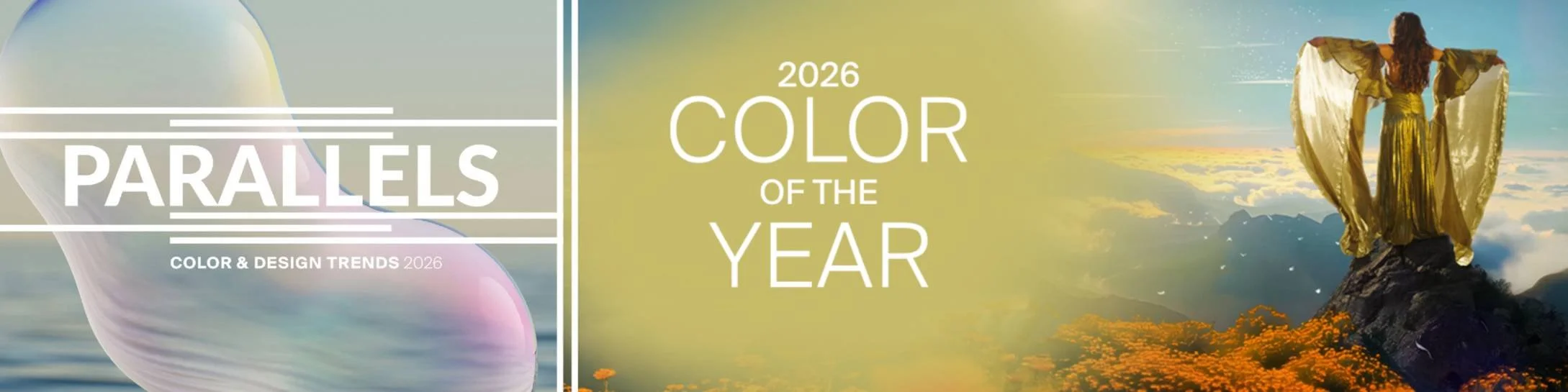
PPG’s 2026 Color & Design Trend theme, “Parallels,” features “Secret Safari” as the Color of the Year.
Where Automotive Color Begins
Each January, long before annual color announcements are made, PPG's Global Color Forecasting team brings together approximately 35 color stylists representing eight business segments to study the cultural, social, economic, and technological shifts shaping our world. Their objective extends far beyond creating colors for marketing campaigns or seasonal inspiration. Instead, they forecast how color preferences will shift and analyze the color palettes that support the future environments where we live, travel, and work.
This practice is the foundation for a global color forecast that influences Automotive OEM, Automotive Refinish, Industrial Coatings, Consumer Products, Electronics, Furniture, Architectural Coatings, and additional industries where color shapes both functionality and experience.
However, for automotive, the process doesn't stop there.
Following the completion of the Global Color Trends Forecast, PPG's Automotive OEM Color Styling team begins translating these macro design trends into production-ready automotive color collections. The team evaluates each color through the lens of automotive design, engineering requirements, manufacturing processes, durability, and long-term market acceptance ultimately ensuring all proposed colors survive a rigorous validation process.
The 2026 PPG Global Color Trends Forecast, Parallels, is the culmination of this extensive research. Selected in January 2025 and refined in that year, the palette gives manufacturers, designers, architects, and coatings professionals ample time to prepare products and spaces that align with emerging consumer expectations around the world. Many of the colors introduced through the 2026 palette are expected to remain influential well into the early 2030s.
This phased approach is a key reason PPG is recognized as a global leader in color forecasting. Instead of simply predicting trends, PPG helps shape the future appearance of products, buildings, and vehicles long before consumers ever experience them.
Instead of focusing on one linear path, Parallels explores three distinct design journeys: Authentic, Visionary, and Expressive. Together, these stories and the complete 42-color palette illuminate how people are responding to today's rapidly changing world while explaining why specific colors, finishes, and materials are gaining momentum across industries.
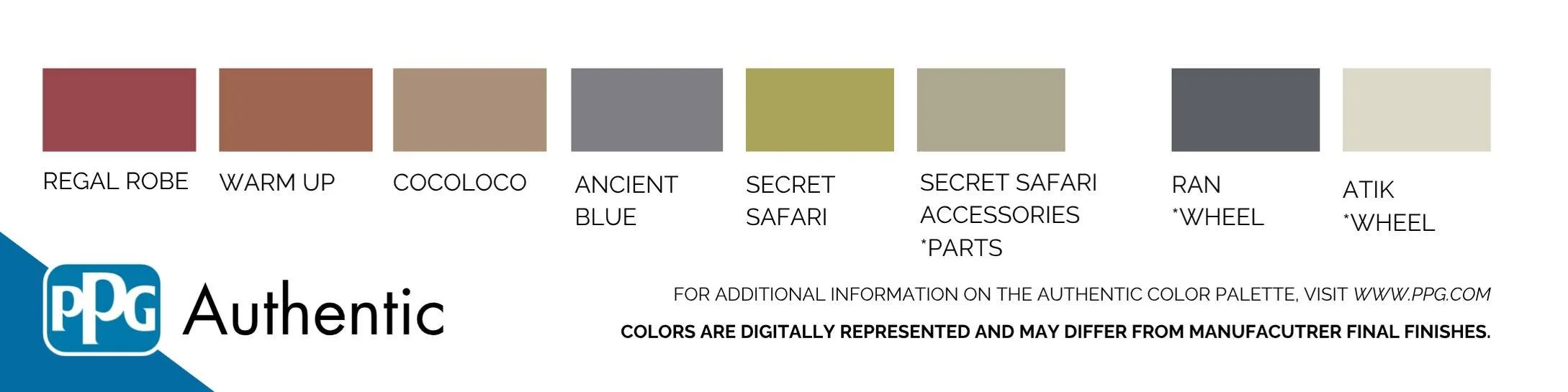
PPG’s Authentic palette blends earth tones, warm neutrals, and heritage-inspired hues.
The Authentic Palette: Rediscovering Meaning Through Timeless Design
PPG describes Authentic as a rejection of the fleeting and disposable in favor of meaningful connections with people, places, traditions, and objects that stand the test of time. The palette reflects a cultural shift from disposable consumption to intentional living. As consumers grow weary of mass-produced, short-lived products, they are placing greater value on quality, craftsmanship, and longevity. Whether restoring a classic vehicle or celebrating handcrafted details, these influences create environments that feel grounded, authentic, and enduring.
The resulting aesthetic embraces simplified beauty, personalized choice, and finishes that celebrate craftsmanship rather than conceal it. Grounded earth tones, warm neutrals, and heritage-inspired hues create a palette that evokes comfort and lasting quality. Colors in this collection such as PPG Ancient Blue, Warm Up, Cocoloco, Regal Robe, Ancient Blue, and, the unifying PPG Color of the Year, Secret Safari. Secret Safari is adapted for automotive parts while Ran and Atik were selected for wheel finishes in this color palette illustrating how these trends are adapted for automotive applications, creating cohesive vehicle designs beyond the exterior body color.
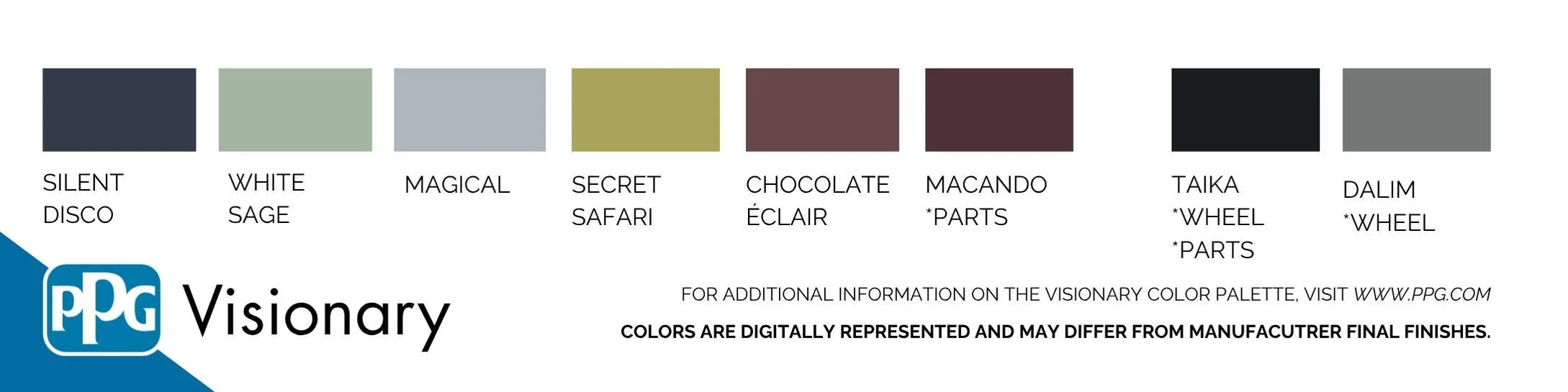
PPG’s Visionary palette blends cool metallics, pearl effects, and refined textures.
Visionary: Finding Calm Within Complexity
If Authentic looks to the past for inspiration, Visionary explores how design creates security amid uncertainty. At its core, the palette balances technology and humanity, innovation and familiarity. Driven by rapid technological change and evolving lifestyles, consumers increasingly seek stability through wellness, personalization, and control. Geometric forms and immersive spaces provide a sense of order in an increasingly complex world.
The visionary aesthetic features subtle contrasts, cool metallics, pearl effects, and refined textures that respond to changing light. PPG colors in this palette include Silent Disco, White Sage, Magical, Secret Safari, and Chocolate Éclair, showcasing a sophisticated direction. The palette expands into specialized applications through Macando and Taika for parts application and Dalim and Taika once again in placement for wheel coatings, demonstrating the versatility of the forecast’s finish offering.
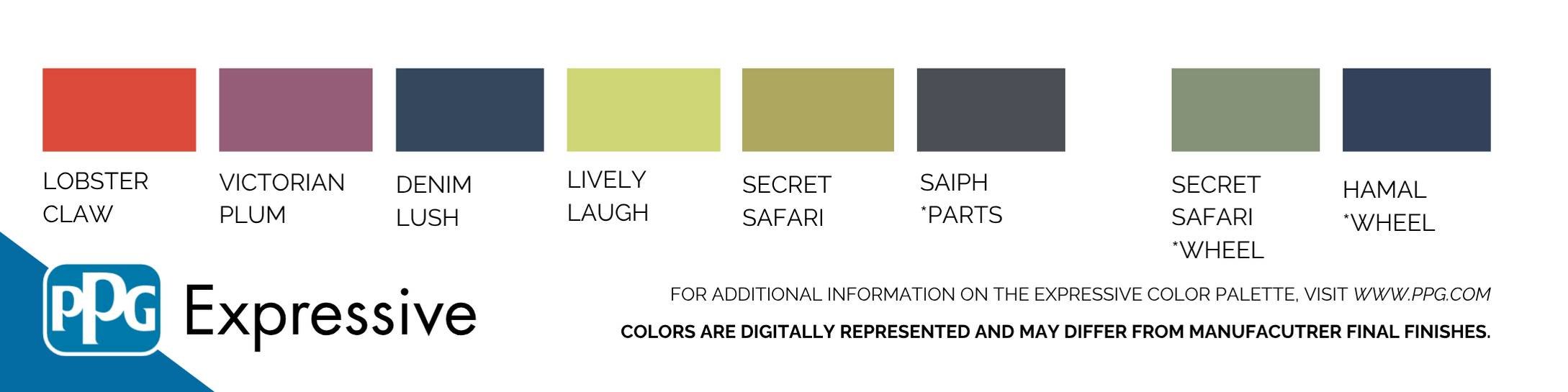
PPG’s Expressive palette combines saturated hues, colorful metallics, playful contrasts, and statement finishes.
Expressive: Optimism Through Creativity and Imagination
While the first two stories seek connection and balance, Expressive celebrates possibility. PPG describes the palette as playful, imaginative, and optimistic, where traditional boundaries blur and creativity flourish. Influenced by gaming, entertainment, and digital experiences, consumers are embracing bold self-expression and designs that challenge convention. The result is a vibrant, optimistic outlook where experimentation, diversity, and creativity inspire products that feel energetic and uniquely personal.
The expressive palette embraces saturated hues, colorful metallics, playful contrasts, statement finishes, and “the unexpected”. Colors such as Lobster Claw, Victorian Plum and Lively Laugh that embody the palette's bold personality, while Denim Lush and Secret Safari offset the bright colors with cool neutral tones. The story continues through Hamal and Secret Safari adapted wheel coatings and Saiph automotive parts, demonstrating how expressive color can extend across warm and cool tones to create distinctive OEM design statements.
Why This Matters to the Collision Repair Market
When collision professionals see a new color, pearl effect, satin finish, or specialty wheel coating on a late-model vehicle, they are often seeing the result of decisions made years earlier during the global color forecasting period and Automotive OEM color development process.
Today's Parallels forecast is already helping shape the vehicles of tomorrow. As OEM designers incorporate these coordinated color and finish systems into future vehicle programs, collision centers can expect to see a growing variety of specialty finishes, continued matte technologies, curated OEM finish offerings, and color-shift effects entering the repair market.
Users of PPG’s refinish coatings have the advantage of partnering with a company that is already influencing future Automotive OEM finishes, providing valuable color insight years before those vehicles arrive in dealerships, and eventually, collision centers.
Attribution & Disclaimer
The PPG Logo is a registered trademark of PPG Industries Ohio, Inc. and is used with permission. Certain PPG Color & Design Trends images and related materials are reproduced with permission from PPG Industries and are used for informational purposes only.
PPG 2026 Color & Design Trends imagery used in this posting is digitally rendered for visualization purposes and may appear differently than actual finishes, colors, or printed materials. These renderings are intended as a reference only. For the most accurate representation of PPG colors and finishes, please refer to official PPG color chips, spray-out panels, or other approved PPG materials.
Special thanks to color stylists from PPG’s Automotive OEM and Automotive Refinish businesses for providing reference materials, technical information, and support in the development of this content.