
October 30th,
A regulation written in Southern California might seem far removed from a collision center in Missouri, a fleet operation in Nebraska or a manufacturer in Kansas. When it comes to coatings and solvents, however, decisions made by the South Coast Air Quality Management District can have an impact far beyond California.
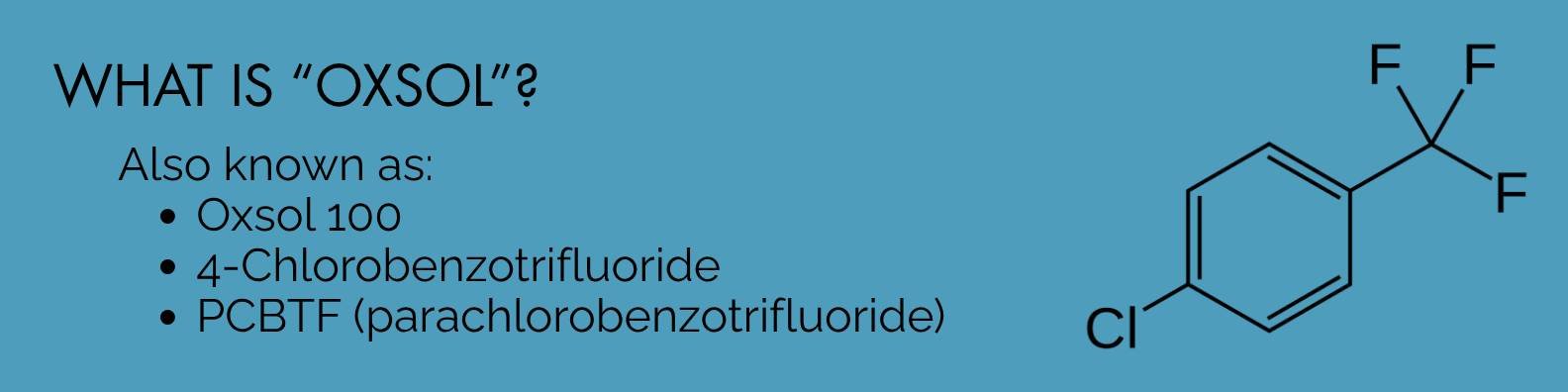
That influence is becoming especially visible as manufacturers reformulate products containing para-chlorobenzotrifluoride, commonly referred to as pCBtF, PCBTF or Oxsol 100.
To understand why products are changing, it helps to first understand SCAQMD and the role it plays in the coatings industry.
What Is SCAQMD?
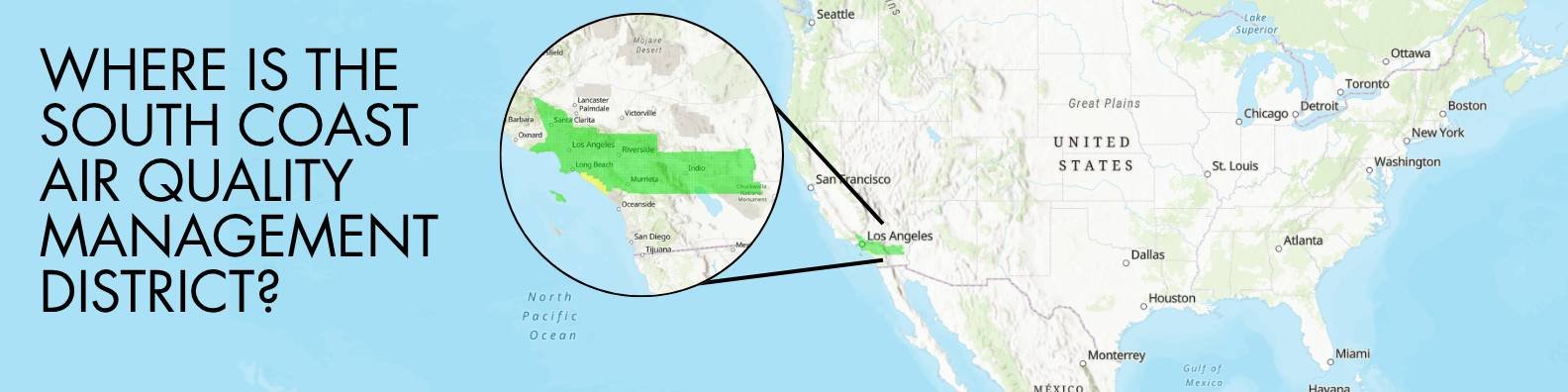
The South Coast Air Quality Management District, or SCAQMD, is the air pollution control agency responsible for Orange County and the urban portions of Los Angeles, Riverside and San Bernardino counties in California.¹
Its jurisdiction covers approximately 10,743 square miles and more than 16 million people. Because Southern California has historically faced significant smog and air-quality challenges, SCAQMD has frequently been at the forefront of efforts to reduce air emissions.¹
The agency regulates emissions from stationary sources, including businesses that use paints, coatings and solvents. It develops air-quality plans, establishes emissions rules, issues permits and conducts inspections to determine whether businesses are meeting those requirements.¹
For the automotive refinish and fleet coatings industries, these regulations are particularly important because coatings and solvents can be significant sources of volatile organic compound, or VOC, emissions.
Why Does a Southern California Agency Matter to the Rest of the Country?
SCAQMD regulations do not automatically become federal regulations, nor do they directly govern a collision center operating in a National Rule area hundreds of miles away.
Their broader influence comes from the size of the Southern California market and the standards manufacturers must meet to sell products there.
Coating reformulation can require laboratory development, performance testing, raw-material changes and regulatory review. Manufacturers selling products nationally must therefore decide whether to maintain separate formulations for different regions or develop products that can meet more restrictive requirements across a broader market.
Applying similar formulation standards across multiple regions can help reduce manufacturing complexity and cost. Producing separate versions of the same product can require additional raw materials, production schedules, packaging, inventory and distribution planning.
When practical, a formulation that works across several regulatory regions may be more efficient than manufacturing multiple regional versions. This helps explain why stricter requirements in a major market such as Southern California can eventually influence products sold elsewhere.
Where Does Oxsol Fit In?
In the early 1990s, Occidental Chemical Corporation introduced PCBTF and related benzotrifluoride solvents for industrial applications under the OXSOL® trademark, with PCBTF commercially marketed as OXSOL 100. Although the federal trademark registration has since expired, the OXSOL name became so widely recognized within the coatings industry that “Oxsol” is still commonly used as shorthand for PCBTF.³
PCBTF became especially valuable because it was classified as an exempt compound for VOC regulatory purposes. The American Coatings Association or “ACA”, notes that PCBTF has been one of the coatings industry's most widely used exempt solvents and has helped manufacturers formulate products that comply with increasingly restrictive VOC limits.²
Being VOC-exempt does not mean the solvent is absent from a coating or without other environmental or health considerations. Rather, the exemption relates to its relatively low contribution to the atmospheric reactions that create ground-level ozone.
PCBTF has been used in coatings applications across a variety of industries and also offered useful formulation characteristics. ACA notes advantages including a slower evaporation rate and higher flash point compared with certain alternative exempt solvents.²
In practical terms, PCBTF helped manufacturers reduce regulated VOC content while working to maintain the application and performance characteristics customers expected.
Why Is Oxsol Now Being Removed?
Although Oxsol has been useful for reducing regulated VOC content, concerns surrounding its potential toxicity have led California regulators to take a closer look at its continued use.
In 2019, California's Office of Environmental Health Hazard Assessment added PCBTF to the state's Proposition 65 list and subsequently established a cancer inhalation unit risk factor for the compound.² This increased regulatory scrutiny has created pressure for coatings manufacturers to develop alternative formulations. The SCAQMD then put in place a plan to roll out restrictions on the use of oxsol.
As a result, customers throughout the coatings industry may already be beginning to see products reformulated without Oxsol.
Why Reformulation Can Be Complicated
Removing one solvent from a coating is not necessarily as simple as replacing it with another.
Solvents can influence evaporation rate, application, flow and overall coating performance. ACA has emphasized that exempt solvents such as PCBTF have been important tools for manufacturers trying to meet very low VOC limits and has raised concerns that removing those options can make it more challenging to maintain both regulatory compliance and product performance.²
Manufacturers must therefore balance evolving regulatory expectations with the application characteristics and performance that collision centers, fleet operations and industrial users rely on.
That can require considerable research, testing and product-development work.
Why Does This Matter in National Rule Markets?
A regulatory change affecting Oxsol in Southern California does not automatically mean that every Oxsol-containing product becomes prohibited throughout the United States. Businesses still need to follow the regulations applicable to their own location.
However, local regulations do not necessarily have to change for product availability to change.
At times, a manufacturer selling coatings nationally may decide that maintaining separate formulations for highly regulated markets and National Rule areas is inefficient. When technically and economically practical, standardizing formulations across multiple regions can help reduce manufacturing, inventory and distribution costs.
As a result, some shops in National Rule markets may eventually encounter reformulated products, replacement SKUs or discontinued products even though the regulation that helped drive the change originated thousands of miles away. This will not necessarily happen with every product or manufacturer.
That also does not mean an Oxsol-containing product is suddenly noncompliant everywhere. Rather, the regulatory environment surrounding the ingredient is evolving, and in some cases manufacturers may choose to respond with broader product changes.
The Bigger Picture
The story of Oxsol illustrates how environmental regulation and coatings technology continually influence one another.
PCBTF became an important formulation tool because its VOC-exempt status helped manufacturers develop lower-VOC coatings while maintaining the performance characteristics customers required.²
Now, concerns surrounding the compound are prompting manufacturers to rethink formulations that may have relied on PCBTF for years.
For businesses outside California, the takeaway is not that SCAQMD rules suddenly apply to them. It is that regulatory decisions made in a large and highly regulated market can influence product development and ultimately the coatings available throughout the country.
That is why collision centers, fleet operations and other coatings users should understand what Oxsol is, why manufacturers are beginning to remove it and why the products they use may continue to evolve.
-
Sources
1. South Coast Air Quality Management District (SCAQMD)
“What Is South Coast AQMD?”
https://www.aqmd.gov/aq-spec/aboutscaqmd#whatis2. American Coatings Association (ACA)
“PCBTF Advocacy”
https://www.paint.org/aca-advocacy/pcbtf-advocacy/3. Sources:
D.P. Curran et al., Benzotrifluoride and Derivatives: Useful Solvents for Organic Synthesis and Fluorous Synthesis, noting that PCBTF and 3,4-DCBTF were introduced by Occidental Chemical Corporation in 1992 for industrial solvent use under the OXSOL trademark.
California Air Resources Board, Technical Assessment of Aerosol Adhesives, identifying PCBTF as “also known by the trade name Oxsol 100” and OXSOL 100 as a registered trade name of Occidental Chemical Corporation.
USPTO-derived trademark record for OXSOL, Registration No. 1,735,902, showing the registration is no longer active.